
Your Garage Door Shouldn't Sound Like That
You press the button on your garage door opener, and instead of the smooth, quiet hum you're used to, you hear something else entirely — a loud grinding, a sharp squeal, or a rhythmic banging that makes your neighbors look over. If your garage door has started making strange noises, you're not alone. It's one of the most common reasons homeowners in St Johns call us for service.
The good news is that most garage door noises point to identifiable, fixable problems. The bad news is that ignoring them usually makes things worse — and more expensive. Let's walk through the most common garage door sounds, what they mean, and what you should do about each one.
Grinding or Scraping Sounds
A grinding or scraping noise when your garage door opens or closes is one of the most unsettling sounds you can hear. It typically means metal is rubbing against metal somewhere in the system, and there are a few common culprits:
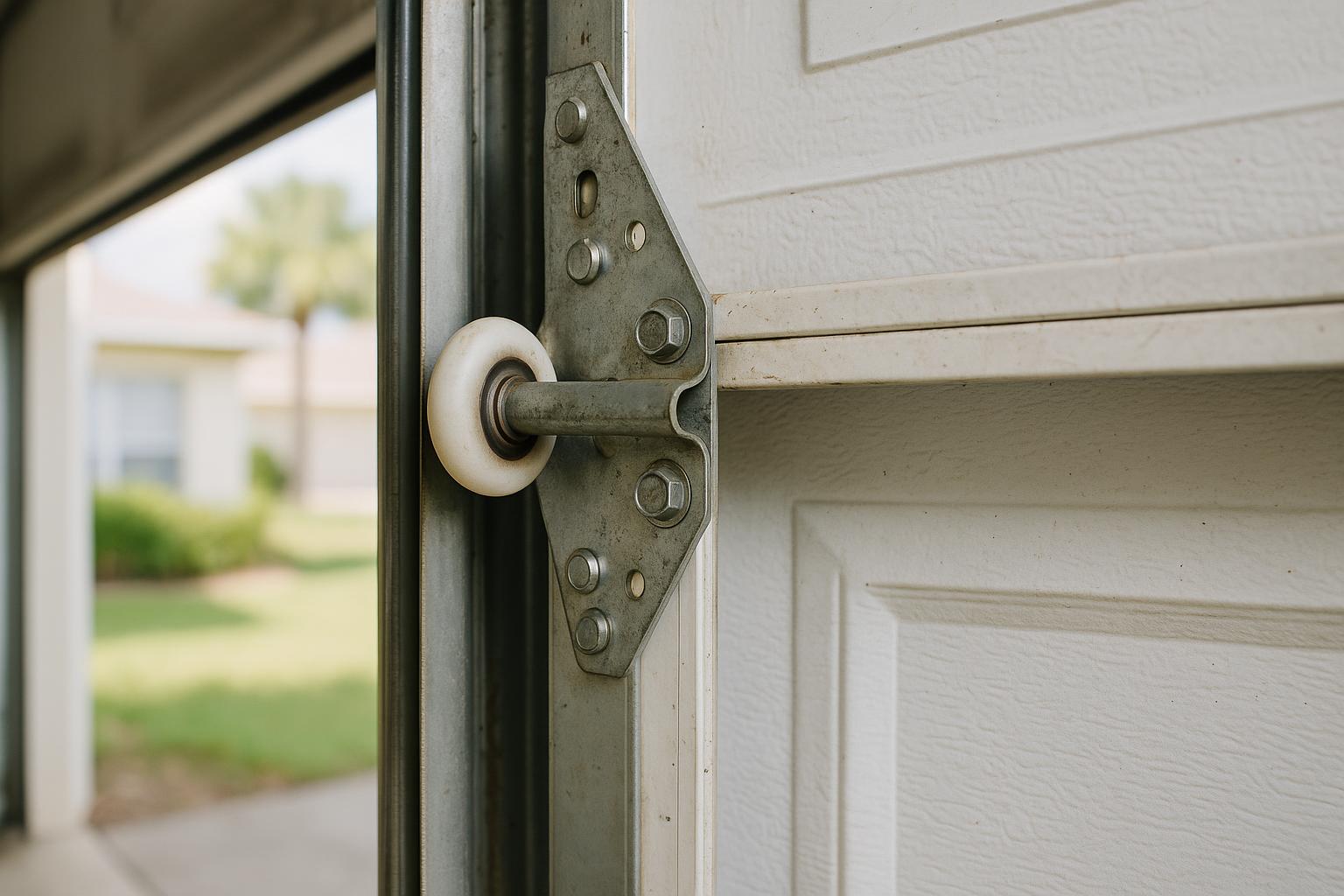
- Worn rollers: Garage door rollers guide the door along its tracks. Over time, especially with steel rollers, they wear down and start grinding against the track. Nylon rollers are quieter and last longer, and upgrading to them is one of the most popular requests we get from homeowners in the St Johns area.
- Misaligned tracks: If the vertical or horizontal tracks have shifted even slightly, the door can scrape against them as it moves. This can happen from normal use, temperature changes, or even a minor bump from a car.
- Opener gear issues: Inside your garage door opener, there's a drive gear that can wear down over time. When it starts to fail, you'll often hear a grinding noise coming from the opener unit itself rather than the door.
If you hear grinding, stop using the door until you can identify the source. Continued use can cause further damage to the tracks, rollers, or opener mechanism.
Squealing or Squeaking Noises
A high-pitched squeal or squeak is usually a lubrication problem. Your garage door system has many moving parts — hinges, rollers, springs, and bearings — and all of them need periodic lubrication to function smoothly.
Here in St Johns, the Florida humidity can actually work against your garage door hardware. While you might think moisture in the air would keep things lubricated, it actually accelerates rust and corrosion on metal components, which creates friction and noise.
What You Can Do
Applying a silicone-based or lithium-based garage door lubricant to the rollers, hinges, springs, and bearing plates can often eliminate squeaking immediately. Avoid using WD-40 as a long-term lubricant — it's a solvent that works well for loosening stuck parts but doesn't provide lasting lubrication.
If lubricating the moving parts doesn't solve the problem, the squealing may be coming from a spring that's under too much tension or a roller that's starting to seize. Both of those situations call for a professional.
Banging or Popping Sounds
A loud bang or pop when your garage door operates can be startling, and it often signals a more serious issue:
- Torsion spring problems: The torsion springs above your garage door are under extreme tension. As they age, they can start to slip or shift on the shaft, creating a loud popping or banging sound. If a spring actually breaks, you'll hear a sound like a gunshot — and the door will likely stop working altogether.
- Loose hardware: Over time, the nuts, bolts, and brackets on your garage door can loosen from the constant vibration of daily use. A loose hinge or bracket can cause a banging sound every time the door passes that point in the track.
- Panel issues: If a garage door panel is warped, cracked, or coming loose from the frame, it can create a popping or banging noise as the door flexes during operation.
We recommend never attempting to adjust or repair torsion springs yourself. These components are under enough tension to cause serious injury. If you suspect a spring issue, call a professional right away.
Rattling or Vibrating Sounds
A rattling or vibrating noise is often the least serious of the common garage door sounds, but it's still worth addressing. Common causes include:
- Loose chain or belt: If your opener uses a chain drive, a loose chain will rattle and vibrate during operation. Belt-drive openers can also develop slack over time.
- Loose opener mounting: The garage door opener is bolted to your ceiling. If those mounting brackets or the support strut have loosened, the entire unit can vibrate and rattle when it runs.
- Worn insulation or weatherstripping: Sometimes the rattling isn't coming from the mechanical components at all. Loose or deteriorating weatherstripping along the bottom or sides of the door can flap and vibrate during operation.
Tightening loose hardware and adjusting the chain tension are relatively straightforward fixes, but if you're not comfortable working with the opener mechanism, it's best to have a technician handle it.
When to Call a Professional
Some garage door noises can be resolved with basic maintenance — a little lubricant here, a tightened bolt there. But many noises are early warning signs of problems that will get worse without proper repair. Here's a general rule of thumb:
- Try lubrication first for squeaks and minor squeals.
- Tighten visible hardware for rattling and vibrating.
- Call a professional for grinding, banging, popping, or any noise that's accompanied by the door not operating correctly.
At St Johns Door & Opener, we see these issues every day throughout St Johns, Julington Creek, Fruit Cove, and the surrounding communities. Most noise-related repairs are straightforward and affordable when caught early. It's when homeowners wait months — listening to that grinding get louder and louder — that small repairs turn into major replacements.
Preventive Maintenance Makes a Difference
The best way to avoid unexpected garage door noises is with regular maintenance. A professional tune-up typically includes lubricating all moving parts, tightening hardware, inspecting springs and cables, testing the balance and alignment of the door, and checking the opener for wear.
We recommend scheduling a maintenance visit at least once a year — or twice a year if your garage door gets heavy daily use. Many of our customers in Jacksonville, St Augustine, and Ponte Vedra Beach put their tune-up on the calendar alongside other annual home maintenance tasks, and they rarely deal with surprise breakdowns.
Don't Ignore the Warning Signs
Your garage door is the largest moving part of your home, and it works hard every single day. When it starts talking to you — through grinding, squealing, banging, or rattling — it's telling you something needs attention. Listen to it.
If your garage door is making a noise you can't explain or fix with basic lubrication, give us a call. St Johns Door & Opener provides honest, reliable garage door repair throughout St Johns and the surrounding area. We'll diagnose the problem, explain your options, and get your door running quietly again.